Magnesium, Your Luteal Phase and the Little Pumpkin Seed Powerhouse
What magnesium does, and why pumpkin seeds deserve a place in your everyday meals.
I'm Kanika. Thank you for stopping by. 🌱
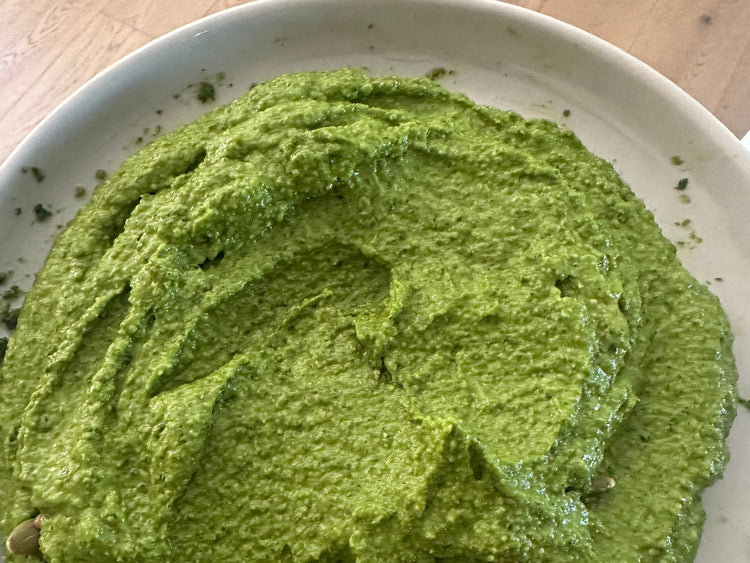
If you've been following Kanika's Kitchen, you might already know my pumpkin seed pesto. It's become one of the most popular recipes on the website, and it's easy to see why. It's simple to make, dairy-free, nut-free and full of flavour. I love how easily it fits into everyday cooking, whether stirred through pasta, spooned over roasted vegetables or added to a bowl of dal.
But there's another reason I love this little green pesto: its star ingredient, pumpkin seeds, is naturally rich in magnesium.
Magnesium seems to be everywhere at the moment. From wellness trends and bedtime drinks to conversations around women's health, sleep and the menstrual cycle.
And for good reason. Magnesium is an essential mineral involved in hundreds of processes in the body. Yet, when we talk about women's nutrition, I think it's worth looking beyond the latest wellness trend and understanding what our bodies actually need.
In my earlier article on cycle syncing, I spoke about including magnesium-rich foods during the luteal phase. Let's explore what magnesium does, what the research tells us about the luteal phase, and some simple ways to include more of it in our everyday meals.
First, what is magnesium and why do we need it?
Magnesium is an essential mineral that your body needs every single day. It acts as a cofactor in more than 300 enzyme systems and plays an important role in normal muscle and nerve function, bone health, protein synthesis and DNA production.
It also contributes to normal energy metabolism and psychological function, and helps reduce tiredness and fatigue.
How much do we need?
According to Australia's Nutrient Reference Values, the recommended daily intake (RDI) is:
- Women aged 19–30: 310 mg per day
- Women aged 31 and over: 320 mg per day
- Teenage girls aged 14–18: 360 mg per day
The good news is that magnesium is found in a variety of everyday foods, including leafy greens, legumes, nuts, seeds and wholegrains.
Rather than relying on one particular food, the idea is to include a variety of these ingredients regularly throughout the week.
A little refresher: what's happening during the luteal phase?
The luteal phase is the second half of your menstrual cycle. It begins after ovulation and continues until your next period.
During this phase, progesterone rises and then falls if pregnancy doesn't occur.
It's also a time when some women notice changes in appetite, mood, energy, bloating or sleep. You might find yourself feeling hungrier or reaching for more comforting, satisfying meals.
These experiences can vary from person to person and from one cycle to another.
This is where I like to look at food as a way of supporting everyday nutritional needs, rather than treating individual ingredients as a quick fix for hormonal symptoms.
Does magnesium help with luteal-phase symptoms?
This is where I think it's important to separate what we know from what is still being researched.
What we do know is that magnesium is an essential nutrient. Getting enough through a varied, balanced diet is an important part of everyday nourishment.
Feeding your luteal phase, the food-first way
Rather than focusing on one supplement or ingredient, I prefer to think about the foods we can incorporate into our regular meals.
Some magnesium-rich options include:
- Seeds: Sesame, sunflower, hemp and chia seeds are excellent additions to everyday meals.
- Nuts: Almonds and cashews make an easy snack or can be added to breakfast.
- Legumes: Dal, rajma, chana and black beans are wonderful sources. A comforting bowl of dal and rice is always welcome in my kitchen.
- Leafy greens: Palak, spinach and other leafy greens can be added to curries, dals and savoury dishes.
- Wholegrains: Oats, millets, brown rice and quinoa all contribute magnesium.
- Dark chocolate: A little dark chocolate can also contribute to your daily magnesium intake.
If you're following a seed-cycling routine, the second half of the cycle traditionally includes sesame and sunflower seeds, alongside hemp and chia.
Both sesame and sunflower seeds naturally contain magnesium. Sesame, or til, has also been a much-loved ingredient in Indian kitchens for generations.
It's a lovely reminder that many of the ingredients we grew up eating can also contribute to our everyday nutritional needs.
Pumpkin seeds: a little powerhouse for every day
Pumpkin seeds deserve a special mention.
In traditional seed-cycling routines, pumpkin seeds are included in the first half of the menstrual cycle, alongside flaxseeds. But their nutritional value isn't limited to one phase of the cycle.
Magnesium is needed throughout the month, and pumpkin seeds are an easy way to add more of it to your meals.
According to the USDA and the US National Institutes of Health:
- A 28 g serving of roasted pumpkin seeds provides approximately 156 mg of magnesium.
- Dried pumpkin seed kernels contain approximately 592 mg of magnesium per 100 g.
- A tablespoon (around 10 g) provides approximately 59 mg of magnesium.
That's a useful contribution to your daily intake, along with other nutrients such as zinc, iron, protein and healthy fats.
My Pumpkin Seed Pesto 💚
If you haven't tried my pumpkin seed pesto yet, this is your nudge!
It's one of the most popular recipes on Kanika's Kitchen. It's dairy-free, nut-free, full of flavour and a lovely way to use pumpkin seeds beyond the usual sprinkle over salads.
Click here for my Pumpkin Seed Pesto recipe.
I love stirring it through pasta, spooning it over roasted vegetables or adding a little to dal. It's an easy way to bring more pumpkin seeds into everyday cooking.
And here's a little nutritional fact I love: the 250 g of pumpkin seeds used in this recipe contain approximately 1,480 mg of magnesium in total, based on USDA food composition data.
How Balance fits into my everyday routine
I created Balance with the idea of making it easier to include a variety of nourishing seeds in everyday meals.
I know how easy it is to have the best intentions about nutrition and then run out of time to measure, prepare and organise everything.

Balance brings together freshly ground seeds in two blends designed around the traditional seed-cycling phases.

Phase 1: Follicular phase
Pumpkin, flax, hemp and chia seeds, with a little desiccated coconut.
Phase 2: Luteal phase
Sesame, sunflower, hemp and chia seeds, with a little desiccated coconut.
Both blends contain naturally occurring magnesium from their seed ingredients.


I like adding a scoop to chia puddings, salad dressings, oats or smoothies and many more things. It's a simple way to make seeds part of an everyday routine without having to juggle several jars in the kitchen.

A few things to take away
Magnesium isn't a miracle mineral, and no single food can do everything. But it is an essential nutrient that deserves a place in our everyday meals.
A few simple things to remember:
- Include magnesium-rich foods such as seeds, nuts, legumes, leafy greens and wholegrains regularly.
- Enjoy a variety of seeds throughout your cycle.
- Keep pumpkin seeds handy. They're easy to add to breakfast, salads, curries and homemade dips.
- Think of seed cycling as a food-based routine.
- If you're considering magnesium supplements, speak with your GP or pharmacist first, particularly if you take medication or have an existing health concern.
For me, good nutrition isn't about complicated routines or chasing the latest wellness trend. It's about understanding what our bodies need and finding simple, enjoyable ways to include those foods in our everyday lives.
And sometimes, it starts with something as simple as a handful of pumpkin seeds.
Be kind to yourself, in every phase. 🌙
If you'd like an easy way to add a variety of seeds to your daily routine, explore Balance by Blend & Balance.
A note on nutrition: This article is for general educational purposes and isn't medical advice. Nutritional needs vary from person to person. If you have concerns about your menstrual cycle, symptoms or nutrition, please speak with your healthcare professional.
Sources and further reading
- NHMRC, Australian Nutrient Reference Values: Magnesium
- Healthdirect Australia, Magnesium and your health
- NIH Office of Dietary Supplements, Magnesium Fact Sheet
- Nutritional interventions and psychological PMS symptoms, systematic review (2024)
- Boyle et al., Magnesium and subjective anxiety and stress: A systematic review (2017)
- Cochrane, Herbal and dietary therapies for dysmenorrhoea
- Oral magnesium for insomnia in older adults, meta-analysis (2021)
- Seed cycling systematic review (2025)
- USDA FoodData Central: Pumpkin seeds, sesame and sunflower kernels
- Kanika's Kitchen: Cycle Syncing Part 2
- Kanika's Kitchen: Pumpkin Seed Pesto
Kanika Khanna
Kanika's Kitchen · kanikaskitchen.com.au · @kanikas__kitchen